
.svg)

Global markets are reeling this morning as crude oil prices soar. WTI rose dramatically in after-hours trading on Sunday evening, nearly touching $120 per barrel. The all-time record high for WTI is just over $147 per barrel, reached in 2008.
Adjusted for inflation, that would be a WTI price of roughly $222/bbl in 2026 dollars, but the reasons for the rise in 2008 differ vastly from those today. In 2008, the shale era had yet to begin and the Straight of Hormuz was not closed, which has always been a doomsday scenario for the energy markets. It's no longer a scenario; it's reality.
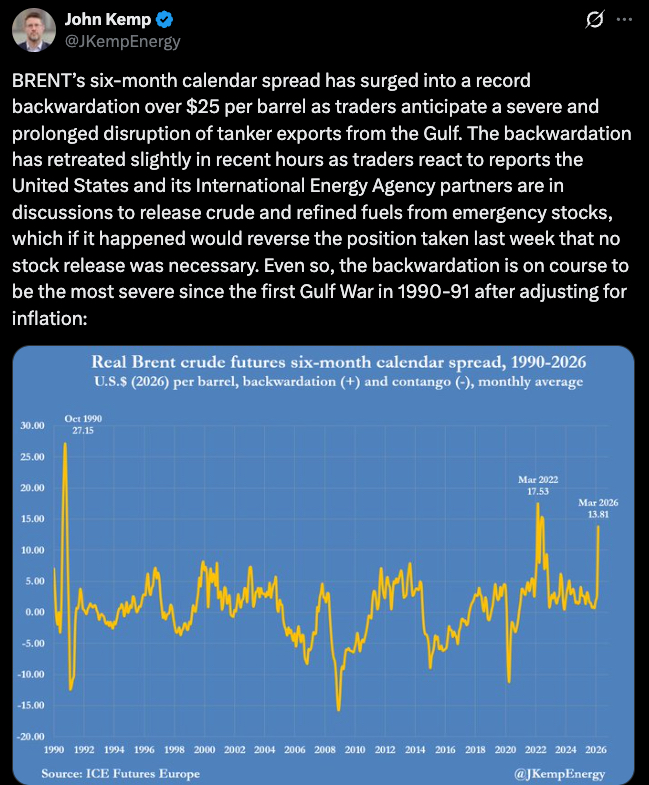

Global leaders are in scramble mode today, with G7 members slated for an emergency meeting. They are coordinating to release their respective emergency crude oil supplies to help put a temporary cap on spiking oil prices. But those supplies only last so long, and the reality is that the Strait of Hormuz needs to be opened and made safe before this energy crisis can be mitigated.
Prices for other energy sources are also soaring, most notably diesel fuel, which is the lifeblood of the American economy. Propane will likely be dragged along by oil, but not in a one-to-one ratio, as propane continues to shed value to WTI.
Another factor to note is that many oil producers are hedging their production with values at these levels, which will likely encourage additional drilling as their net backs have improved. This will likely increase propane production at a time when propane inventories are at historically high levels.
So while other energy markets are seeing price & supply shocks, propane's fundamentals will likely remain bearish as inventories pile up. This will be something we deal with after this crisis is resolved, whenever that may be.
WTI saw its largest weekly increase on record last week, and this week will likely usher in more volatility.